
growing guide
DAHLIA
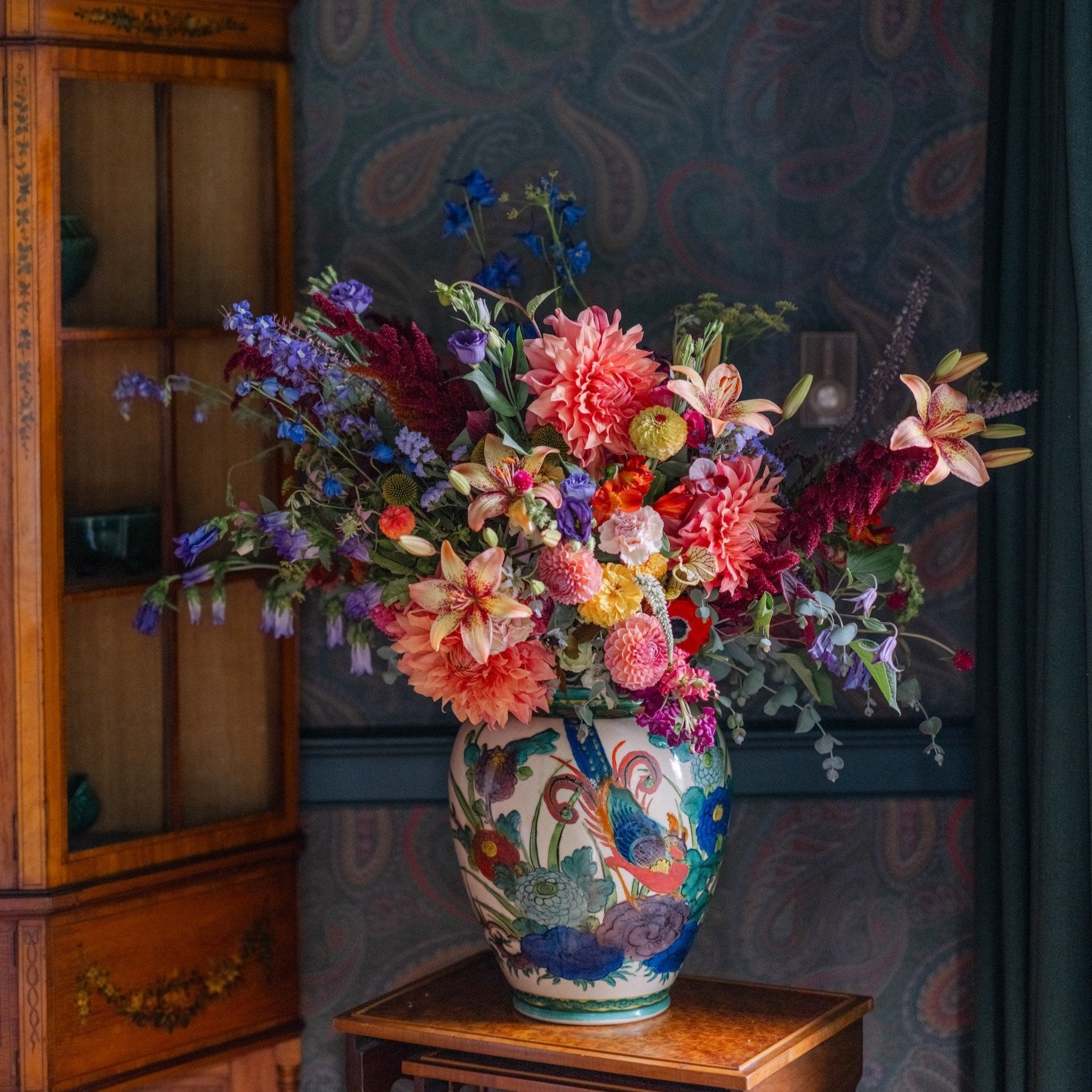
Everyone can recognize a dahlia when they see one – massive, symmetrical flowers really stand out in a garden with their bold pops of color on strong, straight stems. They can almost look artificial from the sheer size and volume of the flowers; petals packed tightly in perfect arrangement – how could they possibly be a product of nature? We’re happy to encourage even the most novice gardeners to try dahlias in their own garden, as you’ll be surprised at the ease of care and massive reward from just a handful of plants. Although they can be grown as annuals in all USDA hardiness zones, Dahlia pinnata are tender tuberous herbaceous perennials; the tuberous roots can be lifted in the fall, overwintered somewhere cool but above freezing and planting again the following spring. If you live in zone 8 or higher you can likely get away with leaving your tubers in the ground, a thick layer of leaves or mulch will help insulate against extreme low temperatures and a tarp over the dahlia bed may be necessary in areas with high levels of precipitation. Soggy, wet soils over the winter will surely rot the tubers.
growing guide
preparation
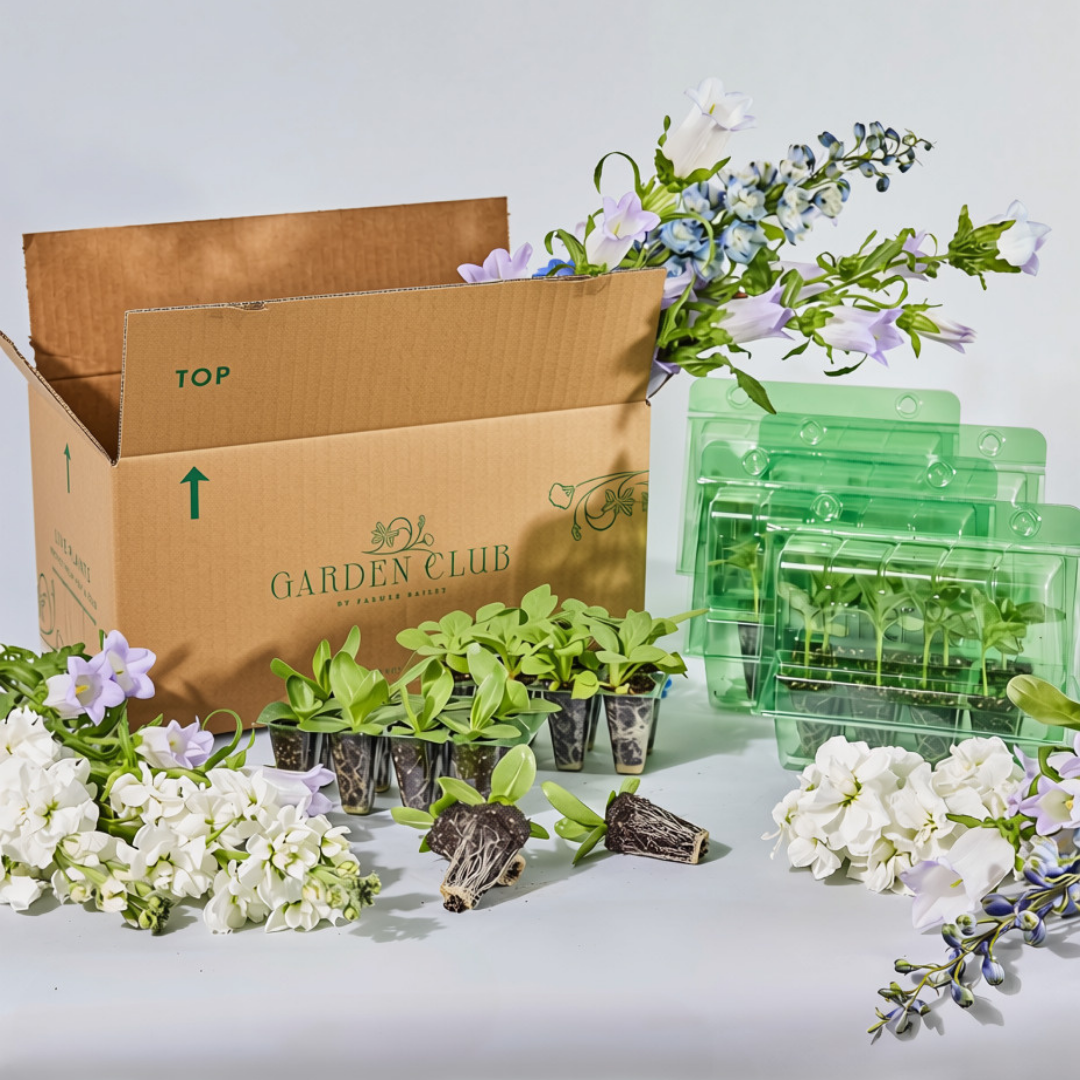
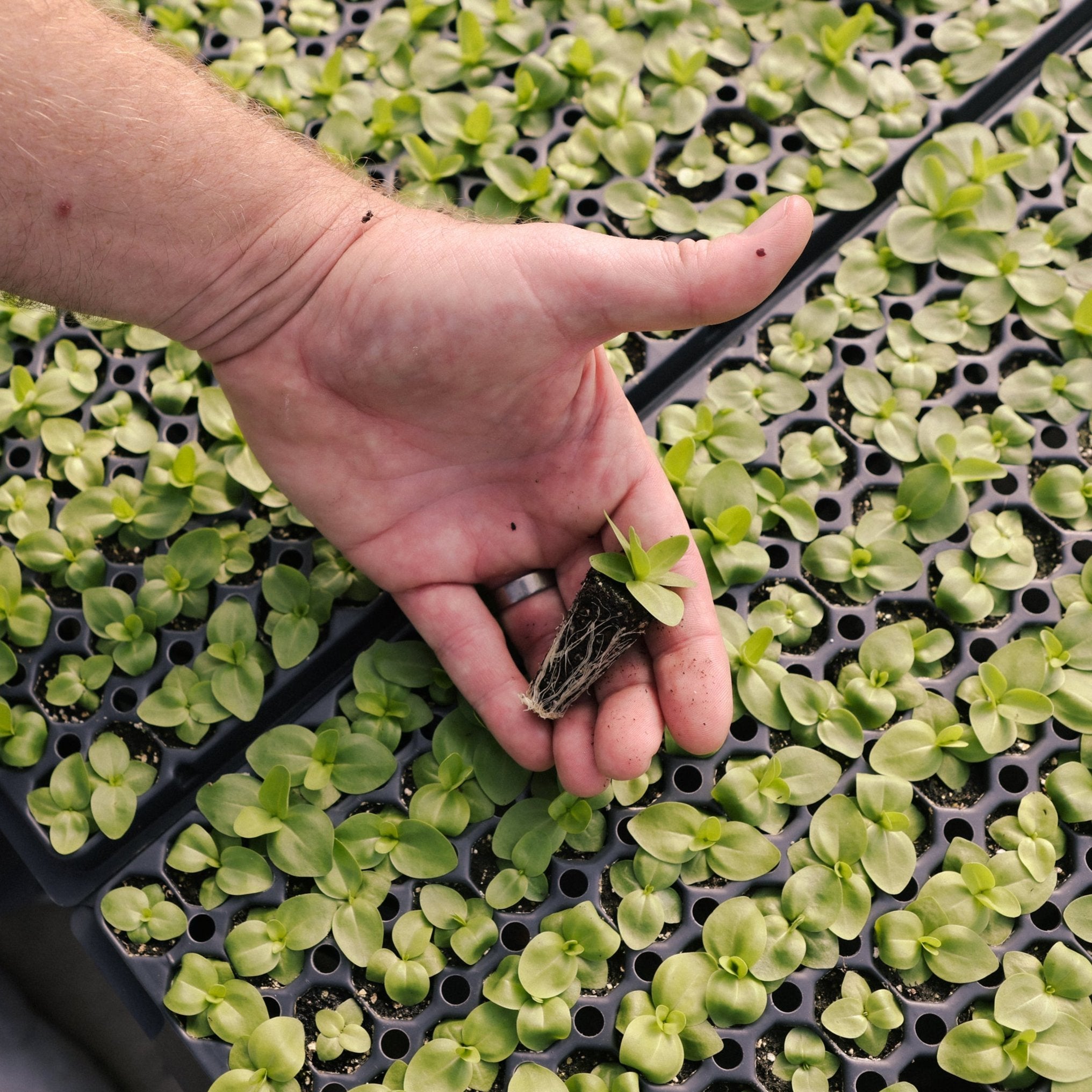
Plugs should be ordered to arrive after all threat of frost has passed and the soil has had a chance to warm up. Dahlias are from Mexico originally and don’t do well with cold temperatures. We suggest planting dahlias around the same time as other heat-loving plants like tomatoes and zinnias. When the plugs arrive, be sure to harden them off for a few days before planting and keep the root zone damp but not fully saturated with water. Dahlias are heavy feeders, and to support the fast growth and extreme bloom power, it's important to amend the planting bed with compost and slow-release fertilizer before planting. In addition to these proactive measures, you can feed your dahlia plants with water soluble fertilizer every week or every other week depending on the strength you choose to water with. Something balanced and easy to find at your local garden center will work just fine (although many people avoid fertilizers like miracle grow for their edible crops, they really do work well for ornamental plants like Dahlias). An important factor when considering where to plant your dahlias is that they are susceptible to root rot in heavy, water-logged soils, so choose an area with loose, well-draining soil. Full sun is also a must – shade of any kind will limit the number of blooms you get over the season and will slow the growth of the plants earlier in the year. These are facultative short-day plants which means they will grow vegetatively during the long days of spring and early summer, and as the days shorten mid-summer, they will start to form buds.
growing guide
Growing
When planting your dahlia plugs for cut flower production, our general rule of thumb is to plant 12-18” apart within a row, and at least 2-3 feet between rows. This is for intensive flower farming purposes, but keep in mind this tight spacing limits airflow and can promote fungal issues in the lower leaves without preventative fungicidal sprays. In normal garden settings give each plant at least 2 feet in all directions as these plants like space! To avoid tall, flower-laden plants from toppling in the wind later in the summer, it’s important to provide some stakes early in the year. Bamboo canes, tomato cages, re-bar stakes or T-posts and twine: you can get creative and use whatever works in your situation. When you plants reach approximately 12 inches in height, it’s good practice to ‘pinch’ your plants back to approximately 3 sets of leaves to help promote side-branching. This may seem counter-intuitive as you’ll be pinching out what would become the first flower, but in doing so you will be rewarded with bushier plants and more abundant blooms. You can water however you choose – with tighter spacing it’s advantageous to water using drip irrigation so the foliage does not get wet. Over-head watering will work if necessary, but water early in the morning before the sun becomes too intense; this will prevent the leaves from scorching and will give the leaves time to dry before nightfall. Dahlias like food, and they like water. To maximize their bloom potential, the soil needs to be kept damp and should never dry out completely or the plants will wilt and become stressed; stressed plants not only under-perform, but they also become magnets for pests such as thrips and aphids. Watch for cucumber beetles, Japanese beetles, earwigs, tarnished plant bugs – you’re not the only one who loves dahlias! You may need to treat for these insect pests using chemical control or beneficial insects, but in areas with high pest pressure you can resort to covering each of your blooms with a large organza mesh bag if you need some cut stems with perfect petals.
growing guide
Cut Flower tips
When harvesting your dahlia flowers – waiting until early in the morning or later in the evening will give you the best results, as the temperatures are generally cooler, the sun is less intense and the plants are more fully hydrated. Dahlia flowers are ready to cut when they are almost fully open – they won’t open in the vase if cut at bud stage, and flowers will shatter quickly if cut when they’re too mature. We suggest “cutting deep” when harvesting, which means cutting long stems that may have a few side branches or side-buds that will be sacrificed. I know, it’s hard to do, but this will encourage more shoots to grow from the base of the plant which increases the number of long stems to cut later in the season. The more you cut, the more you’ll get, so don’t fret – cutting off any faded/dead blooms also helps increase flower production, so energy doesn’t get lost in seed formation. Cut stems should immediately be placed in a container with cool, clean water. Re-cut stems every couple of days and change the water out regularly to increase vase life; unfortunately, dahlias don’t have the longest vase life, but if cut at the right stage they should last 5 or 6 days. As your love of dahlias grows and you dive deeper into your dahlia research, you’ll discover that they are susceptible to a number of viruses and bacteria that can decrease productivity and cause “galls”, or abnormal growths on the stems and tubers. We are proud to report that our plugs are guaranteed virus and bacteria free as they are grown through the meticulous process of tissue culture where they are screened and cleaned for these diseases.