growing guide

Matricaria (Feverfew)

Want a dainty looking flower atop a workhorse of a plant? Look no further than Matricaria. Commonly referred to as Feverfew, Matricaria is from the Asteraceae family and is a very hardy cold-loving annual. The genus is Tanacetum and species is T. parthenium. If left to it's own devices, Matricaria will self seed absolutely everywhere, so be aware to carefully cut away seedheads once formed. These small charming, happy flowers look like mini daisies. They are a beautiful filler flower and bright addition to any farmer’s market bouquet. Matricaria can add whimsy to floral design or pop-art installation.

growing guide

preparation

Best practices for planting Matricaria is to plant in the Fall. Overwintering Matricaria will encourage the roots to strengthen and give the sunny flower a boost when it pops up in the spring. That said, one can successfully plant Matricaria in the spring and enjoy flowers that same season - the result won’t be quite as many strong blooms, but beautiful nonetheless. When spring planting, get them in the ground before last frost--as soon as the soil can be worked--to allow as much time as possible for the roots to establish. Choose an area that receives a lot of sun and fertilize it well with compost for these hungry cultivars. Make sure the soil has a neutral PH and will drain easily.

growing guide

Growing

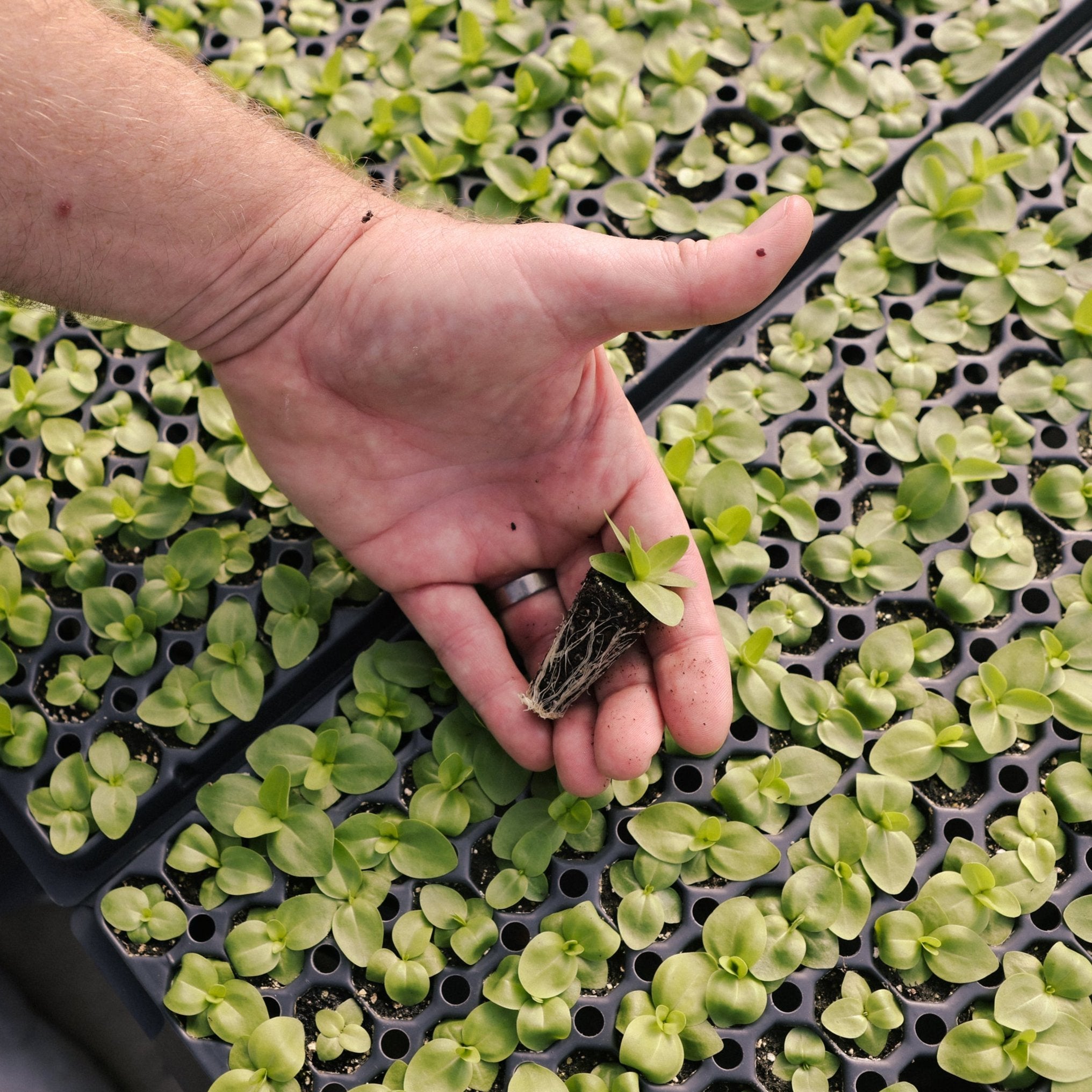
Space the Matricaria plugs 8” apart. Too much space and they have the tendency to topple, because they bloom so prolifically that they get top heavy. If you are growing the Feverfew as an annual, feel free to pack them more densely. They require 14 hours of sunlight to flower, so as previously mentioned, select an area that receives the most sunlight possible. Matricaria will only flower with long days and short nights. Pinching Feverfew is not recommended.

growing guide

Cut Flower tips

Matricaria is ready to harvest for the vase when fully open. If cut too early, the flowers will droop, as their stems will not be strong enough to hold the flower upright. Once cut, immediately plunge in fresh water. If you add a holding solution to the water, the flowers can last up to 2 weeks. Since Matricaria are not sensitive to ethylene gas, you can store the blooms in a refrigerator to extend their life. Pests are rarely a concern with Matricaria, but stay alert aphids, thrips, leaf miners and caterpillars as always. Sometimes gardeners see leaf burn and rosetting due to lack of enough sunlight - these daisy-like dudes can’t get enough light! Also - because Matricaria is self-seeding, it will fill a garden bed easily - watch out and take care that the seed doesn't blow everywhere!

Leave a comment

This site is protected by hCaptcha and the hCaptcha Privacy Policy and Terms of Service apply.