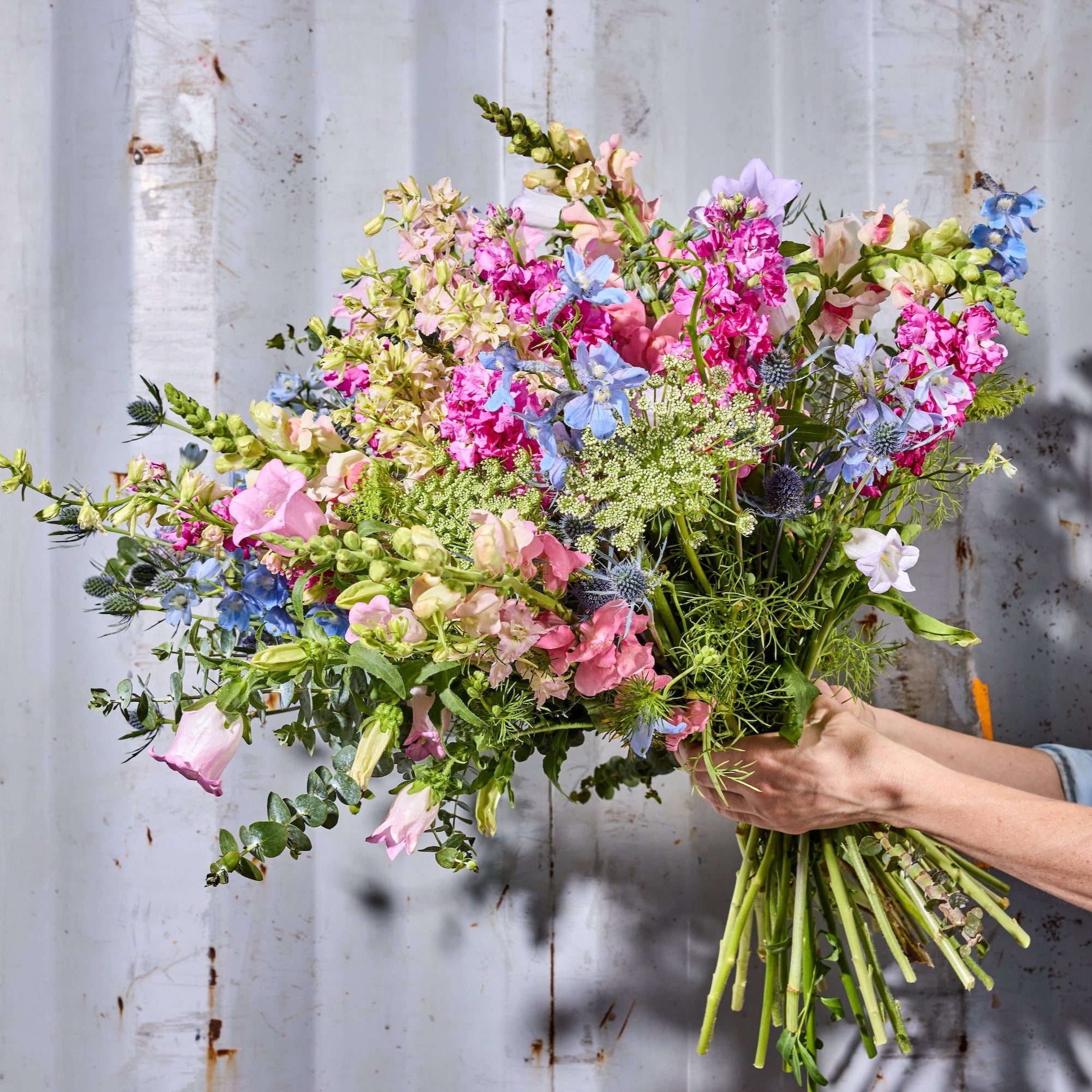
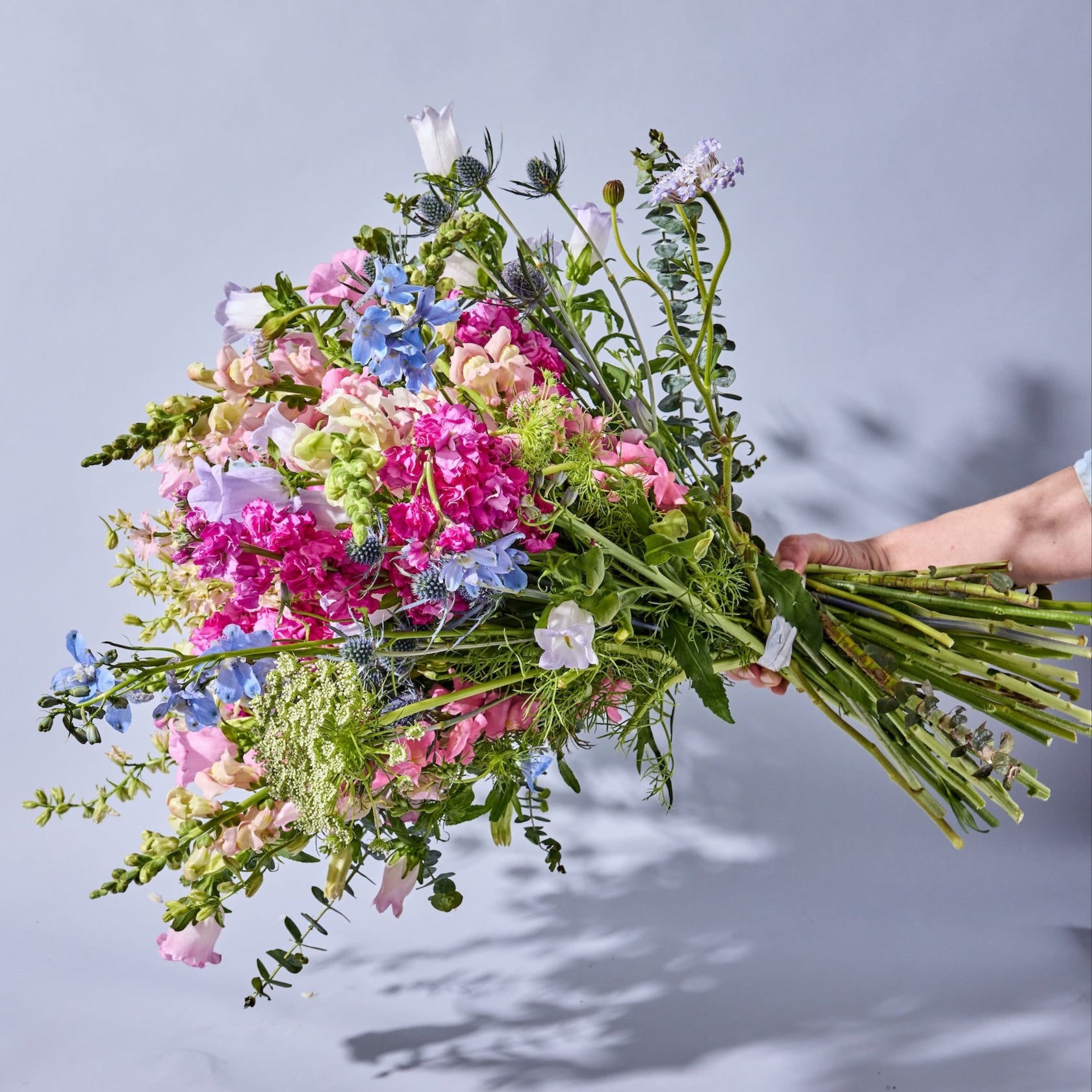
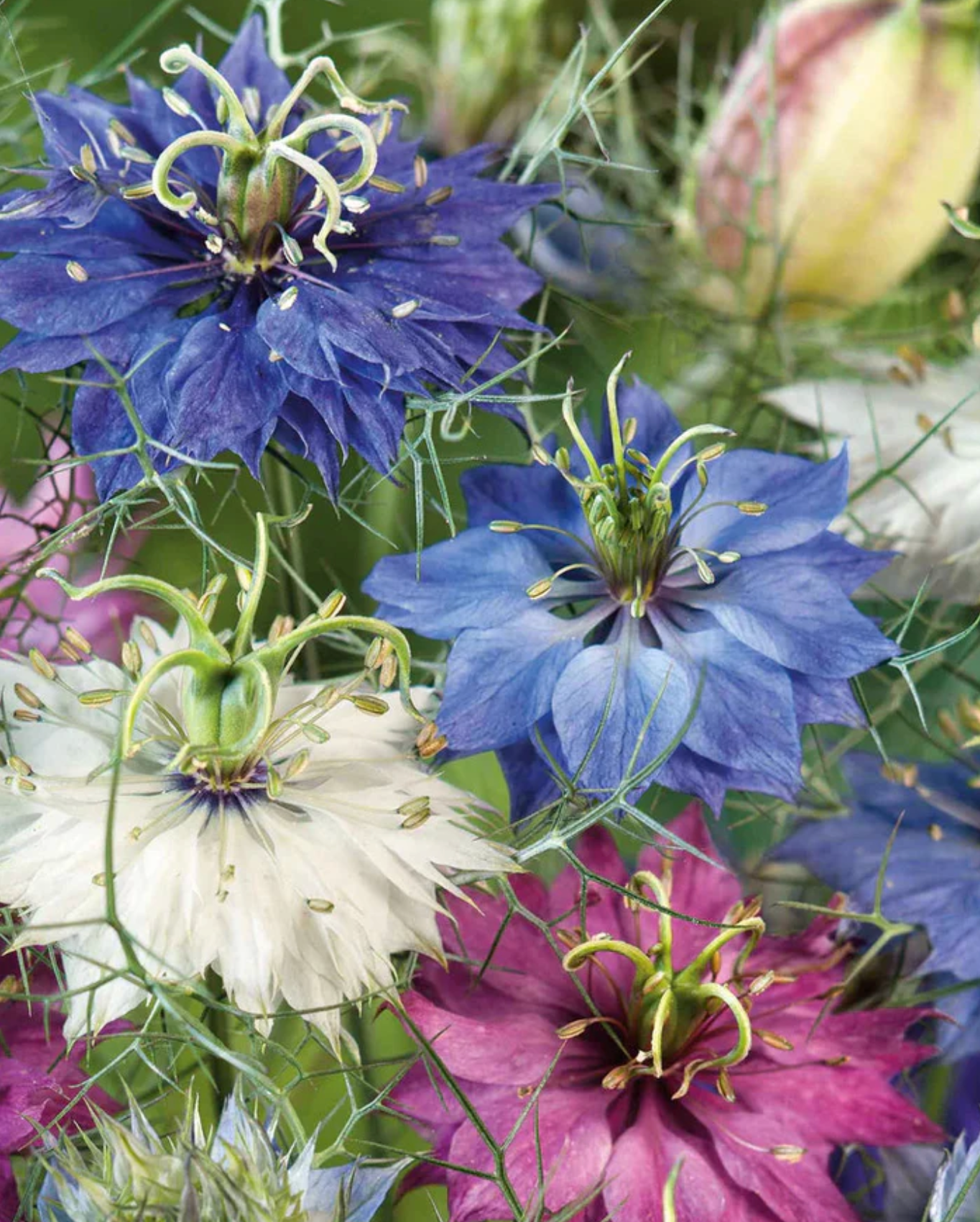
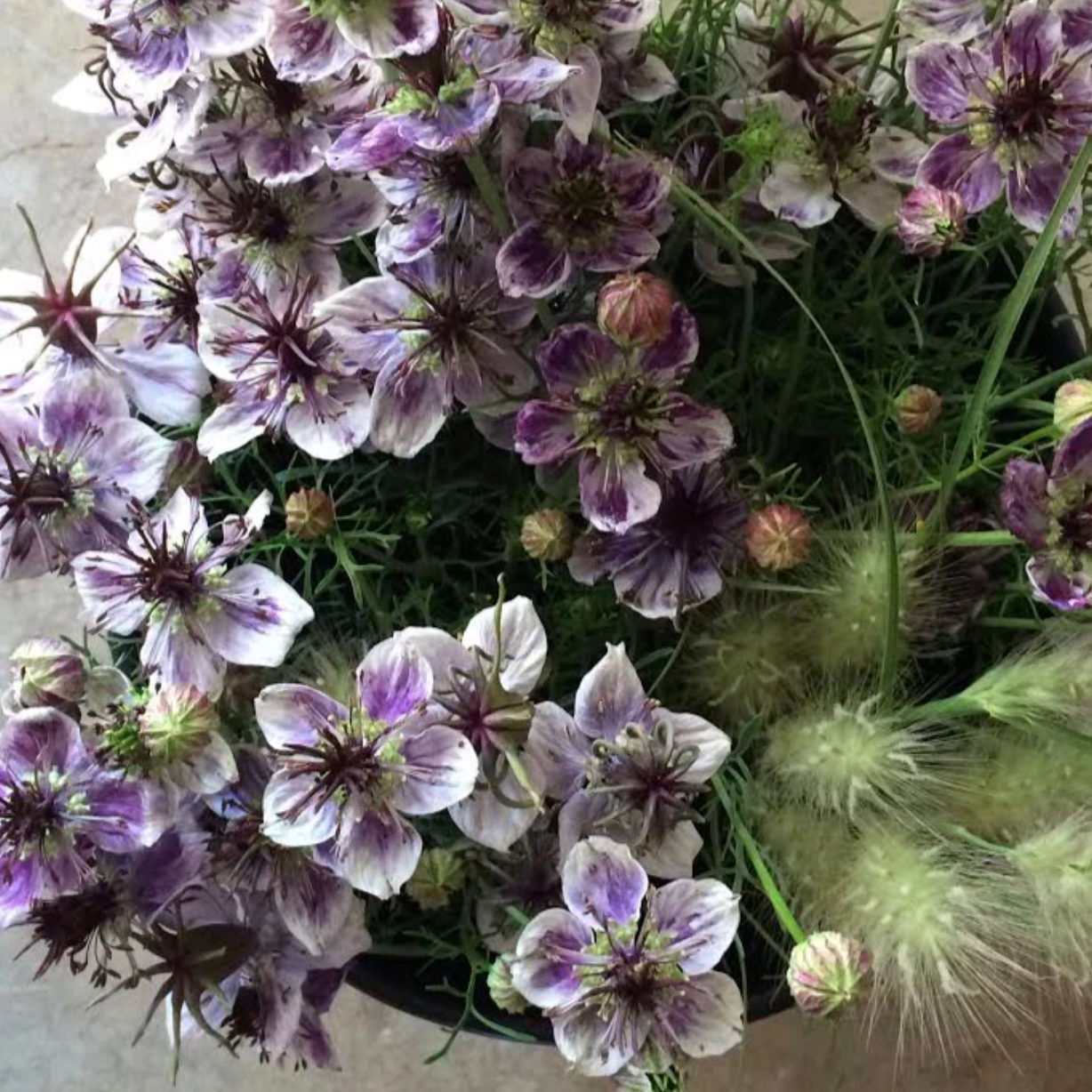
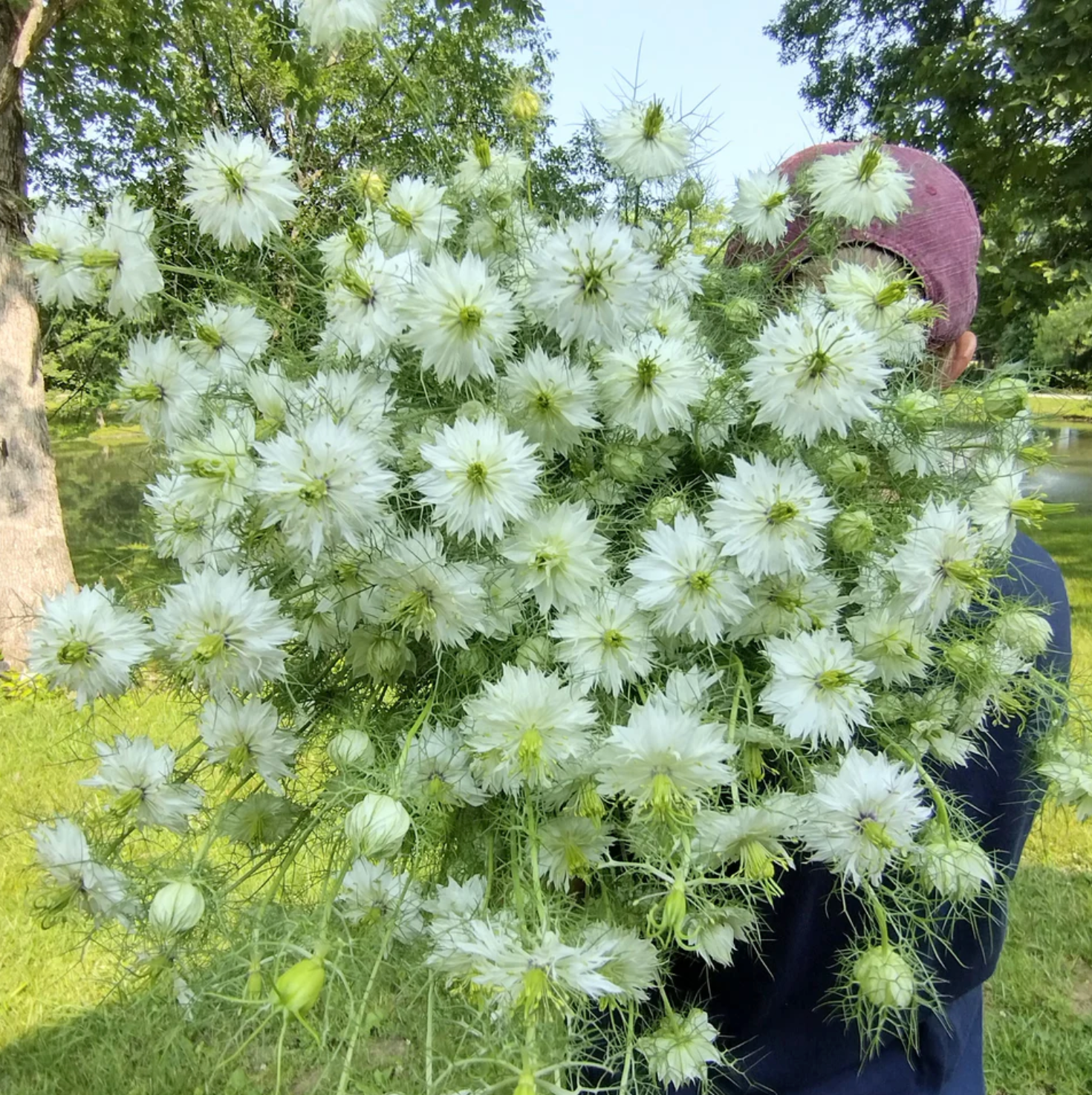
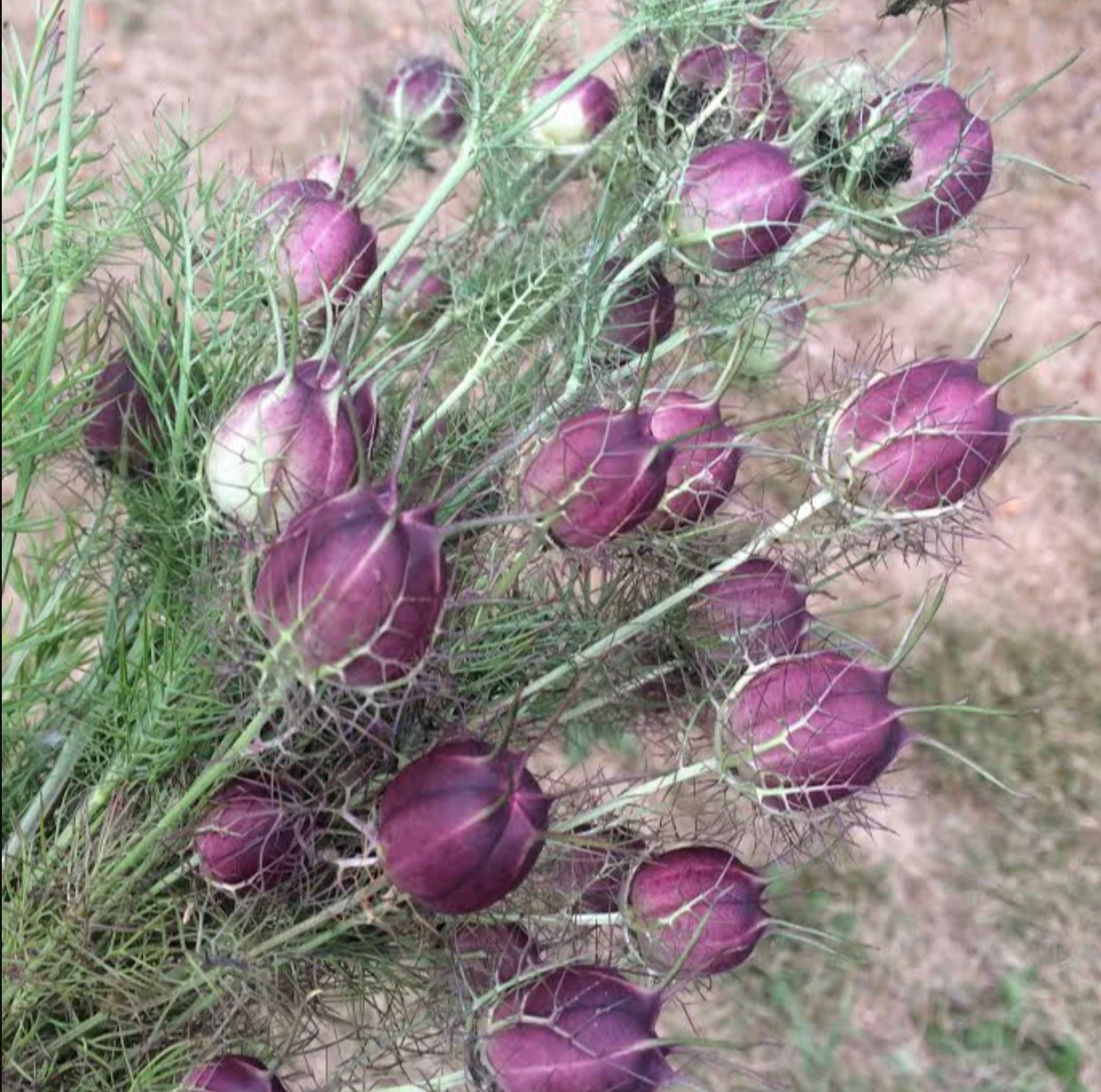
Nigella is easy as pie to grow, but not always easy to start from seed. Once planted, Nigella establishes quickly, and if planted a few inches apart in a patch, will fill in the patch nicely. They are a lovely plant to fill in amongst bare spots in a perennial bed. If plants are left to go to the seed pod stage, expect to see lovely voluteers in your garden the following year. If growing for cutting, spacing at 6" will promote increased stem length. No pinching is necessary. Nigella really is the texture and color we look for both in gardens and arrangements, and can be planted all season long. They will always do best with a cool start.

1 comment
Brenda Atwell
I live in Arizona, 9A I want to plant Nigella in the fall and I’m hoping to have Flowers by the middle of March. Do you think that’s possible?
I live in Arizona, 9A I want to plant Nigella in the fall and I’m hoping to have Flowers by the middle of March. Do you think that’s possible?